
Case Study: Sugarcane Bud Nursery
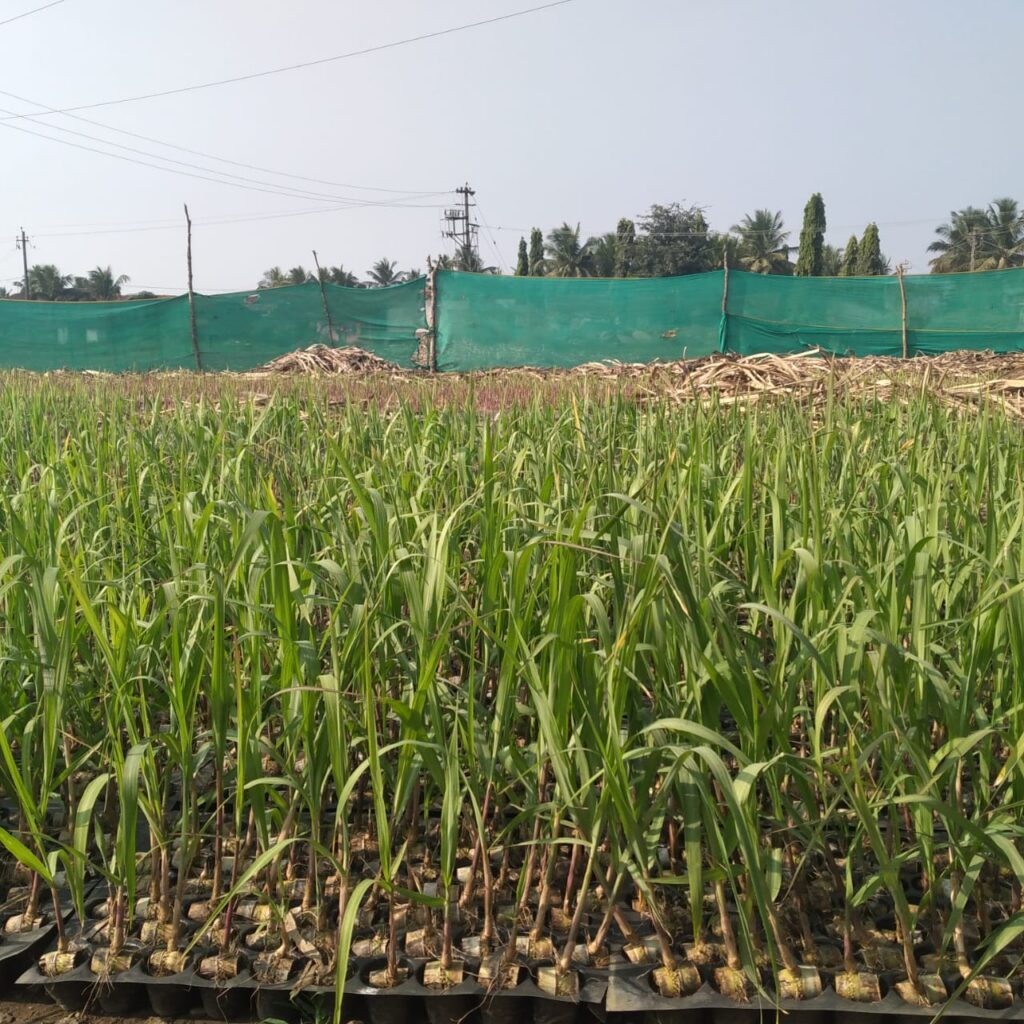
In 2013, CherYsh Trust, in collaboration with EID Parry and Murugappa Group, initiated the Agriculture Program in Haliyal, Karnataka. With sugarcane being a prominent cash crop in the region, CherYsh identified a unique opportunity to empower rural women by involving them in agro-allied livelihoods, such as sugarcane bud nurseries. Key milestones of this initiative: Program Goals and Objectives Challenges Despite its success, the program faces challenges such as limited marketing linkages, resulting in limited orders. CherYsh aims to overcome this through better market integration and product diversification.
Case Study: Spoorthy Community Kitchen Enterprise

Led by Reshma Banu, the Spoorthy Community Kitchen began with financial support and training from CherYsh and Roviralta. Women were equipped with skills in food product preparation, hygiene, and marketing, initially focusing on pickles and spice powders. Today, Spoorthy has evolved into a thriving enterprise, catering to both government and private institutions. Additionally, the women supply spice mix packages and condiments to local organizations like Akshaya Patra and EID Parry kitchens. In 2023, the women showcased their packaged spice mixes, chutneys, and pickles at the Haliyal Utsav, a regional food fair, gaining recognition for their quality products. They are now proficient in sourcing raw materials, maintaining hygiene, and ensuring consistency in production.
Case Study: Belan Rotis: A Success Story
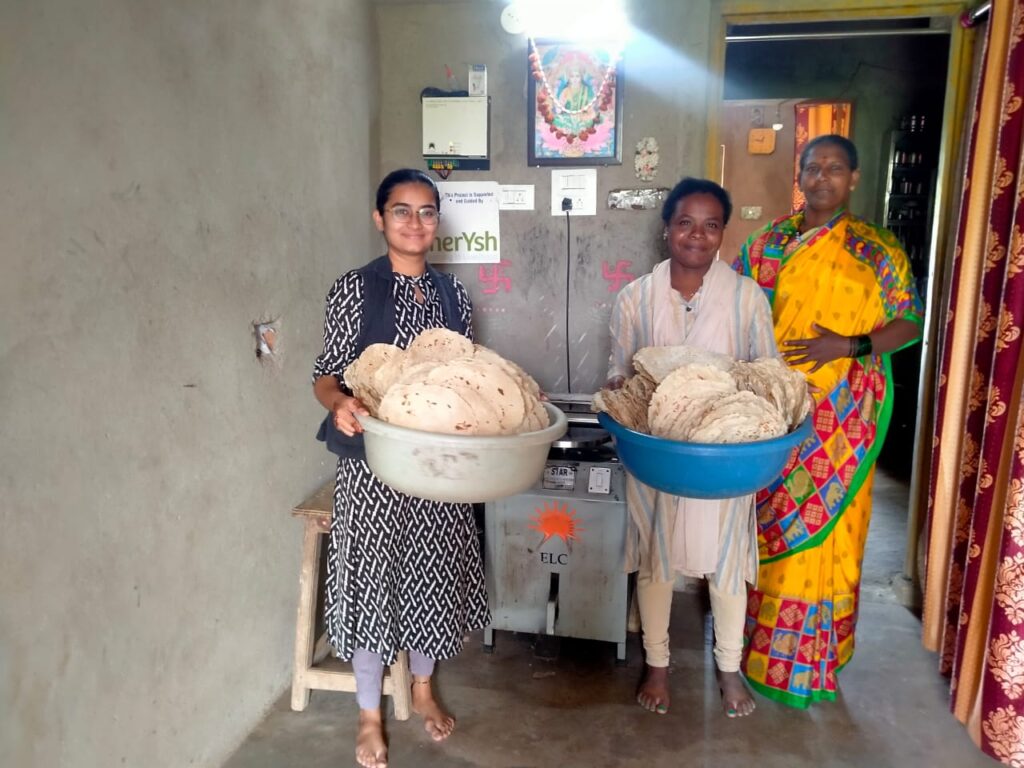
Meet Demakka, a 48-year-old woman from Havagi village, Karnataka. With CherYsh’s guidance, she transitioned from a struggling packaged flour enterprise during the pandemic to launching a roti-making business with her husband. Under CherYsh’s Covid Rehabilitation Program, Demakka conducted a feasibility study, gathering market data and identifying opportunities. The community kitchen that initially launched in 2013 between Roviralta and CherYsh, led to a new partnership with Selco Foundation. Selco supported her business plan and facilitated funding to set up a roti-making machine at home. Since January 2022, Demakka, with her family’s support, has produced and sold over 50,000 rotis, establishing a steady income. Encouraged by this success, she plans to expand into flour production with CherYsh and Selco’s continued support.
KLE Tech University Students Transforming Villages Through RITE

Rural Innovation Through Education (RITE) is a collaborative volunteer initiative with KLE Tech University, where engineering students engage with children in Haliyal villages, with over sixty college students participating so far. Rural Innovation Through Education (RITE) is a volunteer programme, implemented in collaboration with KLE Tech University, Hubli. Engineering students from the University engage with the children in the villages of Haliyal through the programme. More than sixty college students have participated in the RITE programme so far.
CherYsh Skilling & Entrepreneur Program

Women empowerment is one of the cornerstone principles at CherYsh. Some pivotal programs under this principle are the “CherYsh Skilling Program” and the “CherYsh Entrepreneur Program.” These programs empower women and help them escape agricultural bondage and debt cycles, enabling them to sustain their families and support their children’s education through CherYsh’s after-school learning programs. These efforts uplift communities by improving living standards and promoting financial independence. With a strong presence across 50+ villages, CherYsh continues to foster economic resilience by empowering rural women, nurturing their potential, and ensuring long-term sustainability for their ventures. CherYsh is addressing the challenges faced by rural women in Haliyal district, including limited work opportunities, underutilized skills, and barriers to market access. An example is quilt making, while a valuable skill, is labour-intensive and often unsustainable due to insufficient demand. To tackle these issues, CherYsh has launched an Entrepreneurship Development Program aimed at empowering women to build sustainable businesses. The program includes training in business development, financial literacy, project writing, and marketing strategies. Partnerships with organizations like KLE Tech University, Selco and the Deshpande Foundation provide mentorship and support to help women establish and manage sustainable enterprises. Additionally, the program offers financial literacy training, scheme orientation, and market linkages, indirectly benefiting over 200 women. Key Initiatives for Women’s Livelihoods Rural Teaching A Flagship Program: Learning Facilitators & Technology Educators: CherYsh has developed one of the most recognized Learning Facilitator (LF) & Master Trainer programs in rural India, partnering with esteemed institutions to ensure excellence in training. Key collaborators include: Transformational young women that aspire to be confident educators from Haliyal’s rural communities are selected for a rigorous 12-month LF program. The curriculum focuses on pedagogy, technology, and subject expertise in English, Math, and Computing. Weekly coaching sessions ensure participants develop into capable educators with regular incomes. Innovative Training Approach This flagship program not only empowers women with teaching skills but also transforms them into independent, confident contributors to their families and communities.
CherYsh Entrepreneur Program

Women empowerment is one of the cornerstone principles at CherYsh. Another pivotal program under this principle is the “CherYsh Entrepreneur Program.” CherYsh’s primary objective is to identify and develop the skills and potential of rural women, enabling them to engage in home-based industries and entrepreneurial endeavours. Through this program, economic empowerment is fostered, thereby elevating the standard of living for families and contributing to the continued education of their children. Entrepreneurship Development Program (EDP) CherYsh has established a robust grassroots presence in over 50 villages within Haliyal Taluk, launching the Entrepreneurial Development Program (EDP) to empower rural women entrepreneurs. This initiative provides comprehensive training in business development, financial literacy, project writing, and marketing strategies. In response to the economic challenges posed by the COVID-19 pandemic and regional floods, the program supports women who are eager to contribute financially but lack the resources or guidance to establish businesses. Through collaborative partnerships with esteemed organizations such as KLE Tech University, Selco, and the Deshpande Foundation, CherYsh empowers women to establish resilient enterprises. Participants are provided with two years of uninterrupted mentorship and support, ensuring their success. Furthermore, financial literacy training and market linkage assistance indirectly benefit over 1000 women, contributing to a broader community impact. Retail Food Products: Empowering Women Through Community Kitchens Launched in 2013 in collaboration with the Roviralta Foundation, the CherYsh Community Kitchen Program has surpassed our initial expectations over the past decade. This program has fostered new partnerships with esteemed organizations such as Taj Hotels, Akshaya Patra, EID Parrys, Murugappa Group, Selco Foundation, and Buzz Women India. The program empowers rural women to utilize their culinary expertise through home-based enterprises, thereby generating income and enabling them to support their families and ensure their children’s education. Participants from Haliyal received comprehensive training in food hygiene, business management, and finance through classroom programs facilitated by Buzz Women India. Additionally, they gained practical insights through visits to the Taj Gateway Hotel Kitchen and the Akshaya Patra community kitchen. These visits provided them with exposure to best practices in large-scale cooking, packaging, and hygiene. In collaboration with EID Parrys and Murugappa Group, the program secured daily food supply orders for cafeteria workers. Over the past decade, this initiative has significantly transformed the lives of hundreds of women, providing them with sustainable livelihood opportunities within the Haliyal region. The Community Kitchen Program remains dedicated to empowering rural women, transforming their acquired skills into viable and sustainable livelihoods. This initiative fosters independence, financial stability, and ensures the continued education of their children. Program Objectives Program Highlights CherYsh partnered with the Center for Entrepreneurship Development of Karnataka (CEDOK) to provide entrepreneurship training to over 100 women from rural Haliyal. Through this program, participants acquired essential skills in business development, project writing, marketing, and financial management, equipping them with the knowledge and abilities to establish and manage their own enterprises successfully. What People Say “As the Education Coordinator at the Block Education Office, I’ve collaborated with CherYsh for seven years. When CherYsh sought English training for their Learning Facilitators, we partnered to launch the Learning Facilitator Training Program. This initiative addressed the education gap and provided valuable employment opportunities for young women in the region.” James Dsouza, Education Co-ordinator, BEO, Haliyal “CherYsh, a non-governmental organization, has collaborated with Deshpande Pvt. Industrial Training Institute to promote education and skill development. Their partnership has been successful in empowering women in Haliyal district, leading to increased household income and improved education standards in their villages.” Mr. Prakash Prabhu, Chief officer, Deshpande Trust “I’ve been a Learning Facilitator with Shiksha for six years. After completing my 12th standard, my family didn’t support my dream of continuing education, so I married. Joining CherYsh was a life-changing opportunity. I’m grateful for the chance to share knowledge and positively impact the children’s education. When I’m with my students, I’m fully immersed in their learning.” Mangala Mirash, Learning facilitator of the Shiksha program, Sathnalli village
Case Study: Demakka’s Roti Revolution!

A homemaker with a passion for baking and sharing rotis embarked on an inspiring journey with CherYsh, which transformed her life and her kitchen. Let us delve into her remarkable story. Demakka, a devoted homemaker and mother of three, changed her life through entrepreneurship with the support of CherYsh and Roviralta, an organization dedicated to uplifting people’s lives. This case study showcases Demakka’s journey from a small-scale roti seller to a thriving businesswoman, with CherYsh, the Selco Foundation, and the Roviralta Foundation playing a crucial role in her success. Before starting her entrepreneurial venture, Demakka sold rotis to her neighbours to help support her family. A few years ago, CherYsh, in partnership with the Roviralta Foundation, built Community Kitchens in Haliyal. The goal was to teach village women about food hygiene, reduce the use of wood and coal for cooking, and help them develop skills in commercial food production. Partners like Taj Gateway and Akshaya Patra provided training in Hubli, and these kitchens became the foundation for entrepreneurial food product ideas. CherYsh recognized Demakka’s potential and, in collaboration with the Selco Foundation, provided her with a solar-powered roti-making machine and essential training. Eager to build her own business, Demakka seized the opportunity. With CherYsh’s guidance, she learned how to efficiently operate the solar-powered machine. This not only boosted her production but also reduced her reliance on conventional energy sources something that Cherysh and Roviralta aimed for since 2013. When the challenges of COVID-19 arose, Demakka didn’t give up. Instead, she and her family used this adversity as an opportunity for growth. Today, she is producing rotis not only for her neighbourhood but also for nearby towns and villages. Despite the challenges of the pandemic, Demakka’s resilience, along with the sustainability of her business model, helped her overcome obstacles. Her family joined her in the venture, contributing to its growth. A standout feature of Demakka’s success story is the solar-powered roti-making machine. This reflects both environmental consciousness and innovative solutions from CherYsh that empower individuals through livelihood programs. Demakka’s approach is also noteworthy; she never turns away a customer, even if they only need a few rotis. For her, it’s not just about making money, but about feeding people. Her commitment to providing food, no matter the order size, underscores the ethical foundation of her business. She values customer well-being over profit, highlighting the importance of ethics in entrepreneurship. But Demakka’s ambitions don’t stop here. She dreams of expanding her business even further, hoping to acquire flour mill equipment; not just for her family, but to benefit her entire community. With some training and a great deal of enthusiasm, Demakka transitioned from a home cook to a roti-making star. Her journey from homemaker to successful entrepreneur is a powerful testament to the transformative impact of livelihood programs. Demakka’s story is not just about rotis; it’s about turning everyday things into something extraordinary. Thanks to CherYsh and a solar-powered machine, her kitchen became a business hub, and Demakka proves that with the right support, anyone can make a big difference. CherYsh’s strategic collaboration with Roviralta, the Selco Foundation and emphasis on sustainable business practices have not only empowered Demakka but have also set an inspiring example for women entrepreneurs. Demakka’s story serves as a beacon of hope, illustrating the potential within every individual when given the right opportunities and support. Let’s celebrate Demakka’s Roti Revolution and the incredible possibilities that emerge when we work together to make a difference!
Case Study: Savitri’s Sugarcane Nursery in Mundwad

Savitri, from Mundwad, has cultivated more than just a nursery in her village – she has nurtured resilience and success. Her journey from starting a sugarcane bud nursery to thriving in a male-dominated industry is a testament to her determination and the support she received. Savitri’s venture began with training at the Murugappa Group in Chennai, supported by CherYsh, where she learned the ropes of establishing a sugarcane bud nursery. She excitedly walked us through the entire process – from cutting sugarcane buds using a machine to utilizing cocopeat for germination and packing the seedlings. A remarkable detail is how she cleverly returns any waste from the cutting process to the sugarcane factory, ensuring minimal waste. Savitri proudly shared that she sold approximately 8 lakh seeds last year – a truly impressive accomplishment. However, her journey has not been without hurdles. Initially, CherYsh trained three women from her village to help start the nursery. Unfortunately, they faced challenges with germination, and her partners eventually decided to abandon the project. Undeterred, Savitri pressed on, and her unwavering determination eventually paid off. Today, she not only turns a profit but also provides seasonal employment for around 10 people in her nursery. Savitri recalled the scepticism and mockery she faced from others who doubted that women could succeed in such an industry. Her response was simple yet powerful: “People were making fun of us saying women cannot succeed in these kinds of things, which made me want to prove them wrong.” Over the course of six years, Savitri has built a thriving nursery and developed strong relationships with farmers, creating a loyal customer base. Early on, she faced financial challenges, particularly in sourcing water for her operations. But her perseverance led her to own a borewell, solving the water issue and allowing her business to flourish. Innovations for Sustainability: Savitri’s commitment to sustainability shines through in her initiatives. She created a vermicompost space to efficiently use waste cocopeat and seed wastage, demonstrating her dedication to minimizing her environmental impact. Life Lessons and Support: Savitri shared her life philosophy, emphasizing the importance of navigating both sadness and happiness with grace. She spoke about facing challenges head-on and forging one’s own path. Savitri also highlighted the invaluable support from her husband, recognizing how essential a strong support system is in overcoming obstacles. Savitri’s story is a powerful example of resilience and determination. Her journey shows how community support and perseverance can turn challenges into triumphs. Her sugarcane bud nursery not only contributes to the local economy but also stands as a symbol of empowerment, breaking gender stereotypes in the agricultural landscape.
Case Study: Shehnaz’s Knitting Revolution in Mundwad

Meet Shehnaz, the driving force behind a knitting revolution in Mundwad. What began as a personal hobby has blossomed into a community empowerment initiative, transforming the lives of women in her village through skill, determination, and shared success. Shehnaz, originally from Agra Cantt, lived with her ex-army husband during his service, where she developed her skills in nail knitting. When her husband retired and they returned to Mundwad, what started as a domestic activity soon became something much bigger. Recognizing Shehnaz’s talent, CherYsh saw an opportunity to turn her knitting passion into a thriving business. With CherYsh’s support, Shehnaz began sharing her craft with around 50+ women in the village. This initiative gave each participant artisan cards, which not only identified them as artisans but also enabled them to participate in exhibitions across cities like Kolkata, Bangalore, Nagpur, and Pune. The exposure helped the women broaden their horizons and gain recognition for their work. Shehnaz highlights the economic impact this initiative has had on the women in her community. By earning additional income from their knitting, these women have gained financial independence, all while balancing their regular activities. Their travels to various cities exposed them to new experiences, from visiting beaches to navigating sleeper buses and trains—experiences that have taken them far beyond their previous village life. Driven by a desire to uplift other women in her village, Shehnaz finds joy in seeing them become financially independent and empowered. For her, this work is not just about knitting—it’s about transforming lives and creating opportunities for others. CherYsh’s collaboration with V-Act NGO expanded market linkages for Shehnaz and her team, bringing more opportunities their way. Additionally, Shehnaz received advanced training from NIFT Bangalore, and in turn, she trained around 70 NIFT students in nail knitting, enhancing both her expertise and that of others. Shehnaz recognizes the challenge of convincing women to step out of their comfort zones and turn their skills into profitable ventures. She firmly believes that government jobs alone cannot provide for everyone and encourages others to seize opportunities, such as the Artisan cards, to create sustainable livelihoods. Now, Shehnaz has her sights set on an exhibition in Delhi, eager to explore new designs in nail knitting and further expand her business. Her story is a powerful testament to the transformative potential of skills, community collaboration, and the ripple effect of empowerment. From Agra Cantt to Mundwad, Shehnaz’s journey is a shining example of how CherYsh’s creating opportunities and fostering creativity can shape a brighter future for women in the community.
Case Study : Empowering Threads: Tattigere Quilting Collective

In the charming village of Tattigere, a group of women has transformed the traditional craft of quilting into a thriving business. Led by Ashabi and supported by the CherYsh organization, these women have not only created beautiful handwoven quilts but have woven a powerful story of empowerment, collaboration, and community transformation. Ashabi, a talented quilter, inherited her skills from her mother and grandmother, preserving the rich quilting tradition that has been passed down through generations in Tattigere. Building on this heritage, Ashabi and other women in the village, all skilled in the craft, came together to turn their shared passion into a sustainable business venture. CherYsh has been a key ally in the success of the Tattigere Quilting Collective. Recognizing the potential of the women’s craftsmanship, CherYsh has provided valuable resources, training, and a platform to help these women take their quilts to a larger market. This support has not only boosted the community’s economy but also empowered the women to use their skills to achieve financial independence and contribute to the broader community. The quilts produced by the Tattigere collective are more than just functional items; they are pieces of art. Each handwoven quilt adds a burst of color and warmth to a home, carrying with it the story of tradition, skill, and the collaborative spirit of the women who created it. These quilts bring beauty and meaning into living spaces, making them cherished possessions. Within the collective, the women have embraced their unique strengths. Ashabi notes that some members are excellent communicators, and these women are tasked with representing the group at exhibitions and markets. This strategic division of labour allows the creative artisans to focus on their craft, while others handle the business side of the venture, helping the collective reach a broader audience. When asked about the future of their quilting business, Ashabi expresses a desire for their work to be recognized beyond Karnataka. Her dream is for Tattigere quilts to become a celebrated art form across India, showcasing the talent and dedication of the women in her village. Quilting Impact The Tattigere Quilting Collective stands as a shining example of how community collaboration and entrepreneurship can transform lives. With the support of CherYsh, these women have not only revitalized a traditional craft but have also created a business that brings economic empowerment to their village and allows for children to remain in school. Each quilt is a testament to their resilience, creativity, and the enduring spirit of women working together to build a brighter, more colourful future. As Ashabi and her fellow artisans aim to take their quilts to every corner of the country, the Tattigere Quilting Collective represents a powerful story of empowerment, heritage preservation, and dreams that know no bounds.










 LinkedIn