
Empowering Kids Through Community Learning Spaces
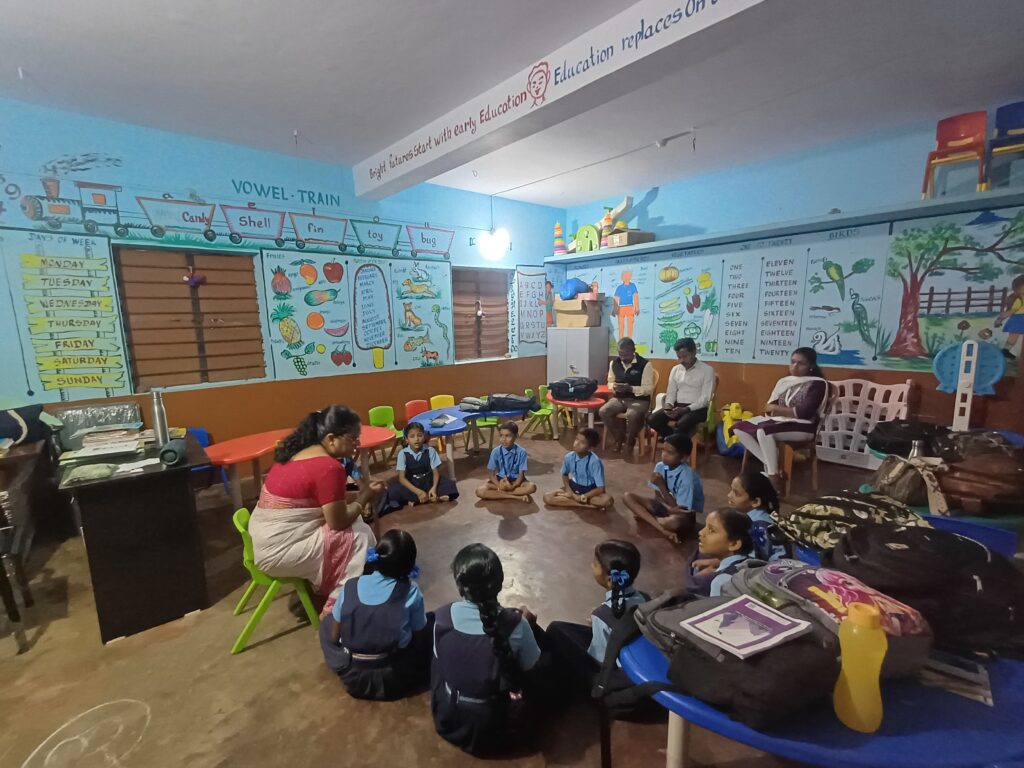
In the quiet lanes of Haliyal’s villages, something remarkable happens every afternoon. Children gather in community homes and shared village rooms—spaces that have slowly transformed into vibrant hubs of learning, creativity, and confidence. These are the CherYsh Shiksha After-School Learning Centres, designed to give rural children the kind of support and encouragement that can change the course of their futures. A Learning Space Rooted in Community The idea behind the Shikshas is simple yet powerful:learning should feel close to home—literally. Each centre is run within the village itself, making it accessible, familiar, and safe. And at the heart of every Shiksha is a trained Learning Facilitator, a local woman who brings warmth, patience, and a deep understanding of the children she teaches. These facilitators are not just instructors—they are role models, mentors, and anchors of trust. Today, more than a thousand children benefit from these community learning spaces. Learning That Feels Like Play The Shiksha curriculum—CherYsh’s Active Rural Curriculum—is built on the belief that children learn best when they’re engaged, curious, and having fun. Lessons in English and Math come alive through: English, often the toughest subject for rural students, is taught through a phonics-based approach. Facilitators use digital phonics modules on tablets, helping children build strong foundations in reading and speaking—skills that open doors far beyond the classroom. Support Beyond Academics Shikshas are more than tutoring centres. They are holistic learning spaces where children receive: Creative workshops add another layer of joy—clay modelling, paper crafts, creative writing, plays, songs, and dance. Experienced trainers guide these sessions, helping children discover talents they never knew they had. Growing Impact, Growing Dreams Between 2015 and 2019, CherYsh reached 26 villages, establishing 37 Shikshas led by 37 Learning Facilitators. Over 1,000 children have been part of this journey—each one gaining confidence, skills, and a sense of possibility. And this is just the beginning.Plans are underway to bring Shikshas to even more villages, ensuring that every child in Haliyal has a place to learn, dream, and grow.
RITE: Engineering Students Bringing Innovation to Rural Classrooms
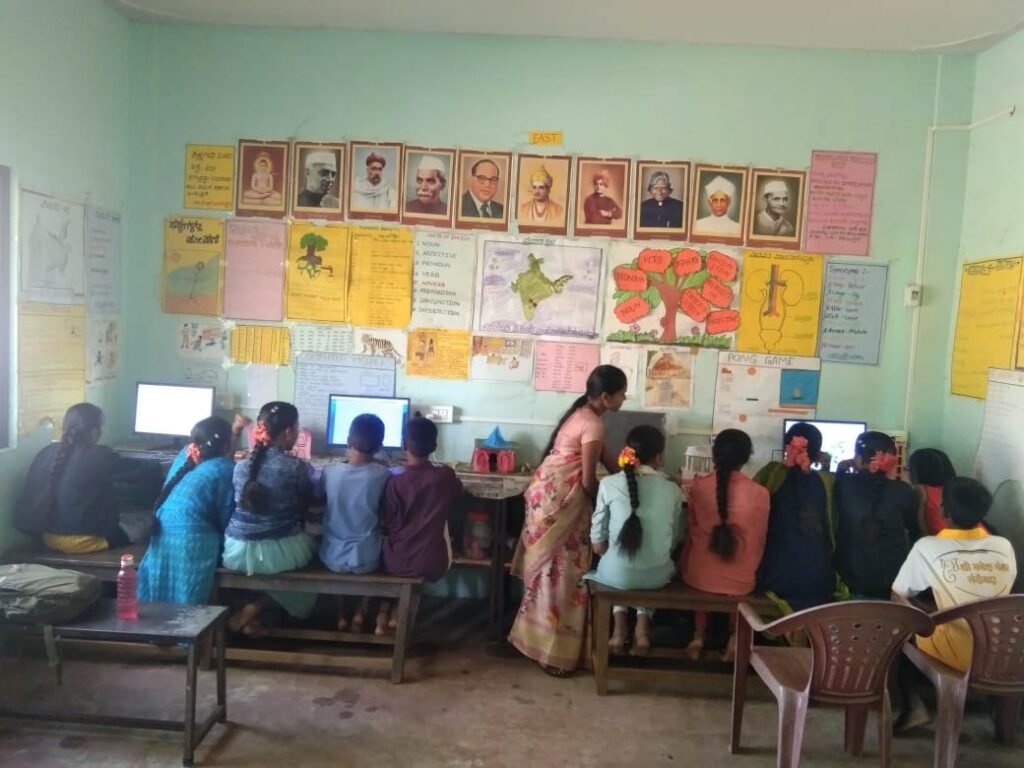
In the villages of Haliyal, something special happens when college students and schoolchildren come together. Through the Rural Innovation Through Education (RITE) program—a collaborative volunteer initiative with KLE Tech University, Hubli—engineering students step out of their campuses and into rural classrooms, bringing curiosity, creativity, and fresh perspectives. RITE was designed with a simple but powerful idea:young minds learn best when they learn from each other. Over the years, more than sixty engineering students have travelled to Haliyal’s villages to engage with children through hands-on activities, experiments, and interactive learning sessions. They introduce concepts in science, technology, and problem-solving in ways that feel exciting and accessible. For many rural children, this is their first exposure to college-level learning and real-world innovation. But the impact flows both ways.The college volunteers return with a deeper understanding of rural challenges, a stronger sense of empathy, and a renewed belief in the power of education to transform lives. RITE is more than a volunteer program—it’s a bridge between two worlds, built on shared learning, curiosity, and the joy of discovery. And with each passing year, that bridge grows stronger.
Training Sessions That Strengthen Haliyal’s Learning Facilitators
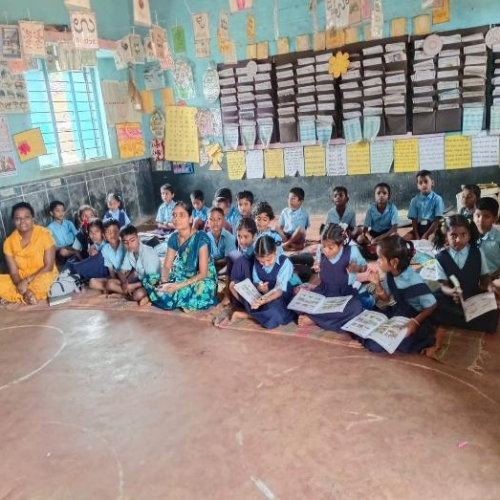
Every new academic year brings fresh energy into our Shikshas—but this year began with something even more powerful: a series of hands-on training sessions designed to strengthen the skills and confidence of our Learning Facilitators. Thanks to our earlier partnership with The Meghshala Foundation, and now with CFTE these sessions helped educators’ step into the classroom better prepared, more inspired, and equipped with new tools to support every child’s learning journey. Learning the Digital Tools That Bring Classrooms Alive Over the summer, our facilitators attended workshops focused on the Meghshala App, the digital backbone of our Shiksha classrooms. Meghshala creates interactive learning modules that our educators use on tablets, making lessons more engaging and accessible for children. During the training, facilitators explored each element of the digital modules—how to navigate them, how to pace lessons, and how to blend technology with their own teaching styles. For many, it was a moment of empowerment: technology was no longer intimidating, but an ally in the classroom. Beyond the App: Building Strong Teaching Practices In June, a two-day workshop led by Mr. Manjunath Hemapur from Meghshala shifted the focus from digital tools to teaching techniques. Through group activities, discussions, and demonstrations, facilitators learned how to create classrooms where children feel safe to question, experiment, and make mistakes. They explored ideas like: These sessions helped facilitators see how their own presence, tone, and seriousness shape the learning environment. When they show enthusiasm, children respond with the same energy. A Stronger Foundation for Haliyal’s Children By the end of the training cycle, something had shifted. Our Learning Facilitators walked away not just with new skills, but with a deeper understanding of their role as educators. They now carry a renewed sense of responsibility—and pride—in shaping young minds. These learnings will ripple outward into every Shiksha classroom.Better-equipped facilitators mean more confident students, more joyful learning, and a stronger foundation for children across Haliyal. The year has only just begun, but the impact of these sessions is already taking root—quietly, steadily, and beautifully.
Transforming Lives: How Local Women Became Educators in Haliyal
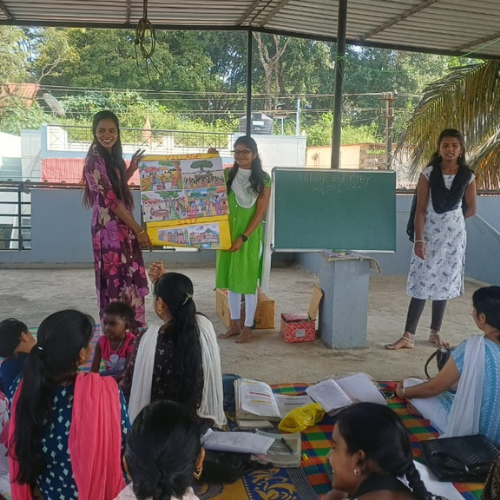
On a typical weekday afternoon in Haliyal, you’ll find a small classroom buzzing with energy—songs echoing through the room, children acting out stories, and a group of young women learning how to teach with confidence and joy. This is the heart of the CherYsh Shiksha Learning Program, where local women are trained to become Learning Facilitators for their own communities. The journey begins with Mr. James D’Souza, a dedicated high-school teacher from Haliyal. With years of classroom experience and a strong foundation in functional English from the Regional Institute of Language, he brings both expertise and heart to the program. Every week, he leads lively training sessions filled with activities, role-plays, and creative teaching techniques—turning learning into something vibrant and alive. For many of these women, this is their first step into a professional role. They arrive shy, unsure, sometimes hesitant. But over time, something shifts. With every class they attend and every skill they master, their confidence grows. They begin to see themselves not just as learners, but as educators—women who can shape the futures of children in their villages. The impact has been remarkable.Over the years, trainers like Mr. D’Souza have invested hundreds of hours into building this community of educators. And today, 37 young women from Haliyal stand proudly as trained Learning Facilitators. They teach with confidence, earn regular incomes, and hold a respected place in their communities. What began as a training program has become a movement—one that transforms not just classrooms, but lives. These women are no longer just participants in the education system; they are leaders, role models, and the driving force behind a brighter future for rural children. In Haliyal, education is no longer something that arrives from outside.It is something grown from within—nurtured by the women who call this place home.
Training Women for Sugarcane Entrepreneurship in Haliyal

If you visit Mundwad village during planting season, you’ll notice something quietly powerful taking shape—not in the fields, but in the hands of a small group of determined women. Here, in the heart of Haliyal’s sugarcane belt, a new kind of rural entrepreneurship is taking root. It began with a simple idea:What if women could turn the region’s most abundant crop into a steady source of income? In 2019, that idea took form as the Mundwad Sugarcane Bud Nursery, created through a partnership between CherYsh and EID Parry Ltd. The goal was clear—equip women with the skills, tools, and confidence to grow and sell high-quality sugarcane buds, a product always in demand among local farmers. Where Training Meets Opportunity Three women from Mundwad stepped forward first. They travelled all the way to Nellikkuppam in Tamil Nadu, where EID Parry runs a specialized training center. There, they learned the science and technique behind cultivating healthy sugarcane buds—knowledge rarely accessible to rural women. When they returned, they didn’t just bring back skills.They brought back possibility. Soon, a group of five women formed the first livelihood collective in Haliyal. With training, seed funding, and ongoing expert guidance, they set up the nursery and began their first cycle of cultivation. A Business Begins to Bloom The results came quickly. The group started selling saplings at a profit, proving that women could lead agro-allied enterprises just as effectively as men—sometimes even more so. Their success sparked curiosity in neighboring villages, where more women are now exploring similar opportunities. Growing More Than Sugarcane What’s happening in Mundwad is more than a livelihood project. It’s a shift in how women see themselves—as entrepreneurs, as contributors to the local economy, and as leaders shaping the future of their communities. With each sapling sold, confidence grows.With each training completed, possibilities expand.And with each new group formed, Haliyal moves one step closer to a thriving, women-led rural economy.
Karakushala Kendras: Where Craft Becomes Community in Haliyal

Walk into the village of Mundwad on any quiet afternoon, and you’ll hear it before you see it—the soft rhythm of wool being looped, stretched, and woven. Inside a modest room, sunlight spilling across the floor, a circle of women sit together, laughing, sharing stories, and creating something beautiful with their hands. This is the CherYsh Karakushala Kendra, a space born from tradition, talent, and the simple desire for women to come together. For generations, the women of Haliyal have carried with them a treasure trove of skills—intricate hand embroidery, delicate crochet, quilting techniques learned from mothers and grandmothers. These crafts were often practiced quietly at home, admired within families but rarely seen as a pathway to income or independence. Yet the talent was unmistakable, and the need for a shared space—somewhere to learn, create, and grow together—became impossible to ignore. In August 2019, that space finally took shape. A Room Full of Possibilities The first Karakushala Kendra opened its doors in Mundwad, and twenty-two women stepped into a new chapter. Here, they began crafting woollen shawls and stoles using the traditional Khilla technique—a method involving a wooden board and nails, transforming simple yarn into vibrant, patterned fabric. What began as a gathering of skilled hands soon became a gathering of confident voices. The women registered themselves as an SHG, taking ownership of their craft and their enterprise. Decisions were made collectively. Designs were chosen together. Every finished shawl carried not just the warmth of wool, but the warmth of community. A Second Home for Craftswomen The success of Mundwad sparked something bigger. In the nearby village of Jogankoppa, another group of women came together—this time to create stunning crochet tapestries. Their Kendra became a place where creativity flowed freely, where women who once doubted their abilities now taught others with pride. And this is only the beginning. Plans are already underway to open more Karakushala Kendras across Haliyal, each one a small but powerful hub of skill, sisterhood, and self-reliance. More Than Craft—A Community Reimagined What makes these Kendras special isn’t just the artistry. It’s the transformation that happens quietly, day after day. Women who once worked alone now collaborate. Those who hesitated to speak now lead discussions. Income that once felt uncertain now arrives with dignity and consistency. In these rooms filled with yarn, needles, wooden boards, and laughter, something deeper is being woven—a stronger, more confident community of women who know their worth and shape their own futures. The Karakushala Kendras are not just centers of craft.They are centers of courage, creativity, and collective strength.








 LinkedIn